AI fashion model generator vs hiring a model: cost per SKU for small apparel brands
What a model shoot really costs per SKU once photographer, model and studio day rates are divided by the styles you get through in a day, what an AI try-on costs per image, where AI still cannot replace a fitting, and the disclosure rules Amazon and TikTok Shop now apply to AI models.
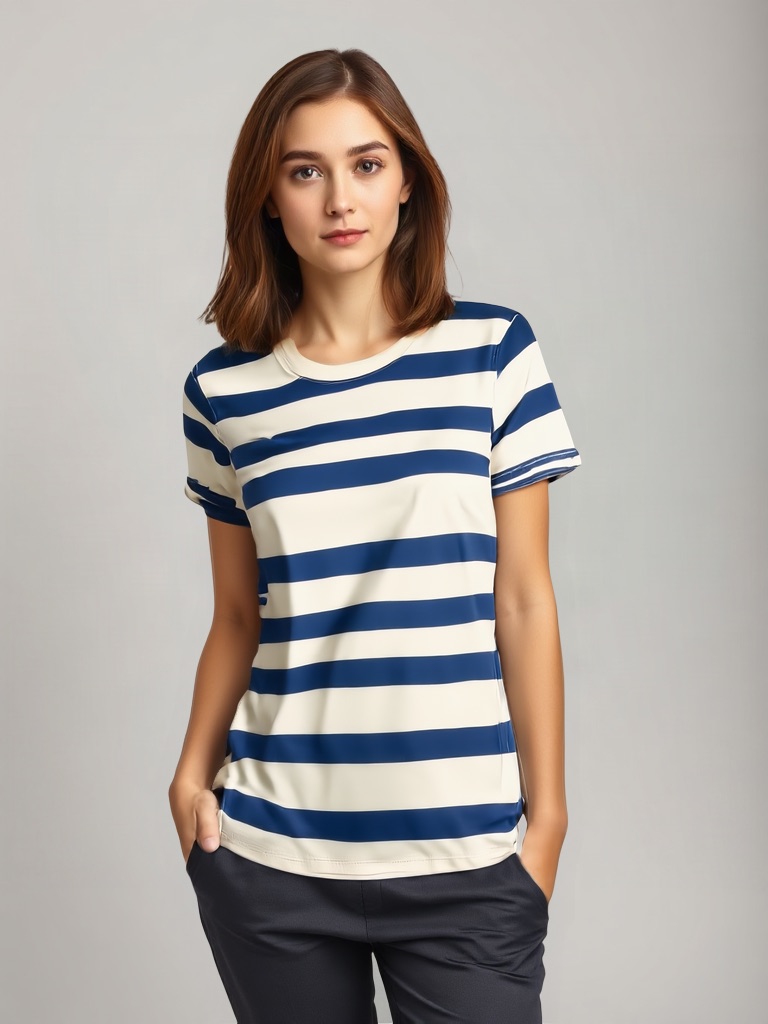
An AI fashion model generator usually costs less per SKU than hiring a model, because you pay per image instead of a day rate, a studio fee and a model fee stacked together. This page works through what each route costs, where AI still falls short for certain garments, what the marketplaces now require when the person in the picture is synthetic, and how to find your own break-even point before you commit a season's photography budget to one method.
Key takeaways
- A shoot is priced per day; cost per SKU depends on how many styles you get through. Divide the day by the SKUs, not by the images.
- US wage data gives the floor: the median photographer earns US$21.47 an hour and the median model US$23.30 an hour (BLS, May 2025); a professional day for both plus a studio starts in the high hundreds and runs into the low thousands.
- An AI try-on is about US$1 for four candidates at PicBarn's 4 credits per run, and you only pay for the styles you generate.
- AI does not verify fit. Confirm a new pattern on a real body once; use AI for colour, pose and channel variations of a fit you have seen.
- Synthetic models now carry platform rules: Amazon requires an XMP tag on photorealistic AI people, and TikTok Shop allows AI images only when they match the real product.
Cost per SKU: the number that actually matters
Total shoot cost tells you little on its own. What matters is cost per finished SKU, because that is the number that scales with the catalogue. A brand with 15 styles and a brand with 150 face completely different arithmetic even if the day rate is the same.
The two cost structures behave differently as SKU count grows. A traditional shoot has a large fixed cost (photographer, studio, model) spread across however many products you shoot that day. An AI generator has almost no fixed cost and a per-image cost that scales linearly. That structural difference is the whole decision.
What a model shoot costs
Hiring a model for product photography is priced as a day, not a photo, and the day bundles three line items.
Published wage floors. The US Bureau of Labor Statistics puts the median hourly wage for photographers at US$21.47 and for models at US$23.30 (May 2025), with 67% of photographers self-employed. Those are employee medians, not freelance quotes; a self-employed photographer's day rate has to cover gear, editing time and the days without bookings, and an agency takes a share of the model's fee. In practice a small-brand e-commerce shoot in a US or UK city is quoted somewhere between a few hundred dollars for a half day with one model and well over a thousand for a full day with a stylist and a rented studio. Get three quotes; the spread is wide.
The quantity that sets the price per SKU. A well-run e-commerce day gets through perhaps 20 to 40 styles on one model at two or three angles each. Take a US$1,200 day and 30 styles: US$40 per SKU. Take the same day and the eight new styles a small brand actually has that month: US$150 per SKU. Day-rate shoots punish small, frequent drops.
Hidden costs. Photographers and studios work in half-day or full-day minimums, so a reshoot for a rejected image, a lighting problem or a colourway added after the booking means another block of time. Model usage rights are negotiated per booking, often for a fixed term and territory, and renewals cost again. Travel, garment steaming, hair and make-up are line items on the quote, not extras you can skip.
What an AI fashion model costs
AI tools are priced per image or per credit. At PicBarn one credit is about US$0.25 and a virtual try-on run is 4 credits for four candidate images, so a new style costs about US$1 to put on a model, with 5 free credits on sign-up; failed runs are refunded and exports are free. Put the eight-style month above through it: US$8, the same week the samples arrive, with no calendar to coordinate.
Three pricing shapes exist across the category: a subscription with included generations, pay-as-you-go credits, and one-time packs. For low, irregular SKU volume, credits beat a subscription because you are not paying for unused capacity; for weekly drops a subscription can amortise. Check the free allowance first so you can judge output on your own garments before buying.
Production speed and workflow fit
A shoot needs a photographer, a model and a studio on one calendar date, so brands batch styles into a quarterly day to justify the rate. An AI generator needs nobody's schedule but yours: two or three new SKUs can be on a model the day the flat-lay photo is taken. For a brand launching a small weekly drop this changes the workflow more than the price does.
Where AI generators fall short
Fit is not verified. An AI try-on transfers the garment pixels onto a synthetic body; it shows a plausible drape, not a measured one. It cannot tell you how the hem falls on a 5'4" frame or whether a rib cuff sits right. For a brand-new pattern, confirm the fit on a person first, then use AI for colourways, poses and channel sizes of a fit you have already seen.
Some garments are harder. Structured tailoring, technical outerwear with many layers, and anything whose selling point is movement still benefit from a real body. Flat-lay tees, hoodies, dresses and knitwear transfer best; prints and stripes carry over well; a flat-lay hood can be misread as a collar, so shoot hoodies on a hanger or mannequin for the input.
Marketplace rules for synthetic people. This is new and specific. Amazon requires that any product image or video containing a photorealistic AI-generated person carry the keyword contains-synthetic-performer in the file's XMP dc:subject metadata before upload, and the A+ asset uploader has an "AI-generated people" checkbox; Amazon's main image still forbids mannequins of any kind and asks for adult apparel on a standing model. TikTok Shop allows AI-generated listing images only when they accurately represent the real product (no change to size, colour, shape or features, no swapping the product for a person as the main subject), expects significant AI use to be disclosed, and bans digital renderings as the main image. A real model booking comes with a model release instead; an AI tool comes with a licence, so read it.
A practical framework for deciding
- Get one real quote for a shoot day covering photographer, model, studio and usage rights, and ask how many styles that day realistically covers.
- Divide the day cost by that number to get a traditional cost per SKU.
- Price the AI route per style: four candidates for about US$1 at PicBarn, or your tool's published rate.
- Weigh your cadence. Eight styles a month in weekly drops favours AI; a 40-style seasonal launch may favour a day with a model, with AI for the colourways afterwards.
- Flag the styles that need a fitting and budget a real check for those only.
- Plan the disclosure: tag Amazon uploads, disclose on TikTok, keep the real-photo main image on both.
Run the steps with your own quotes. For sellers testing the AI route, the AI fashion model generator page shows the 12-persona library and the virtual try-on hub covers inputs that work; both run on the same free credits.
FAQ
How much does hiring a model for product photography cost? It is quoted per day, and the day bundles photographer, model and studio. Median US wages are US$21.47 an hour for photographers and US$23.30 for models (BLS, May 2025); professional day rates for a small e-commerce shoot run from a few hundred to over a thousand dollars depending on city, studio and whether a stylist is booked. Divide the quote by the styles you will actually shoot to get the cost per SKU.
What does an AI fashion model cost per image? At PicBarn, 4 credits for four candidates, about US$1 per style; 5 free credits on sign-up. Other tools price per shot or by subscription.
Is AI model photography cheaper SKU for SKU? For small or frequent drops, by an order of magnitude. For a large seasonal launch the gap narrows because the day rate is spread across many styles; many brands do the launch with a real model and the colourways with AI.
Do I have to tell buyers the model is AI?
On Amazon, photorealistic AI people must be tagged with contains-synthetic-performer in the image metadata and Amazon adds the disclosure where a jurisdiction requires it. On TikTok Shop, significant AI use should be disclosed and the image must match the real product. Check your other channels' current policies.
Do I still need to verify fit in person? Yes, once per new pattern. AI shows a plausible appearance, not a confirmed fit.
Sources
- US Bureau of Labor Statistics, Occupational Outlook Handbook: Photographers and Models, May 2025 median wages.
- Amazon Seller Central, Product image requirements and Tagging media that contains AI-generated people.
- TikTok Shop Seller University, AI-generated content requirements for product listing images and Product listing policy.